
GOLD PROBE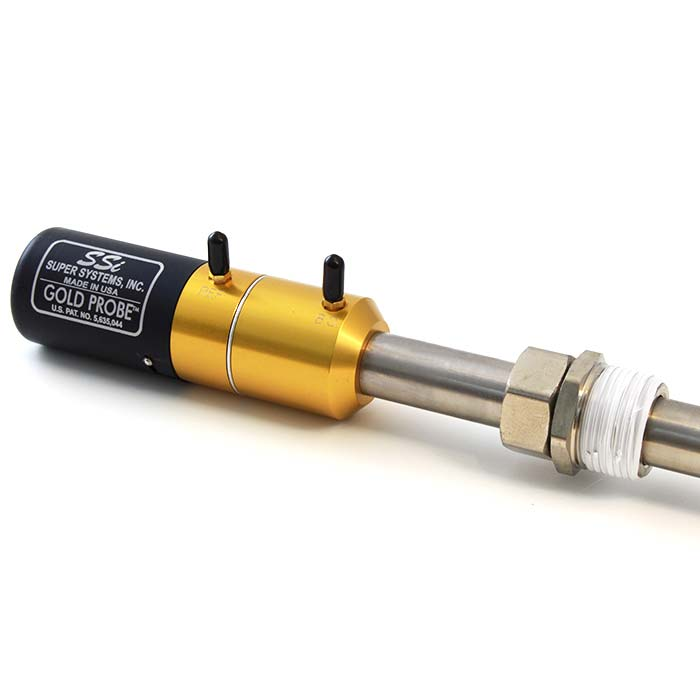
Gold Probe Oxygen Probe
The world's best-selling zirconia oxygen probe measures and controls oxygen, dew point and carbon potential in heat treatment furnace atmospheres.
Oxygen probes
A patented diffused ceramic CERMET coating protects the sheath against temperature and carbon erosion, extending probe life in aggressive carburising atmospheres.
The SSi CeraGold probe shares the design of the SSi Gold Probe with one key difference: a diffused ceramic coating that gives the oxygen probe resistance to high temperatures and aggressive atmospheres. The patented coating forms an impenetrable layer that protects the RA330 alloy sheath against temperature and carbon erosion, also known as green rot.
The coating also reduces the catalytic effect between nickel and methane that occurs in many oxygen probes, which limits sooting and keeps the measurement stable in carbon-rich atmospheres. Furnace users operating above 950 °C with a carbon potential above 1.25 %CP see the most significant gain in probe life.
As with the Gold Probe, every oxygen sensor eventually degrades, but the CeraGold is engineered to be rebuilt at low cost and at short notice.
| Carbon potential measurement | 0.01 % - 1.6 % |
|---|---|
| Accuracy | +/- 0.02 %CP |
| Operating temperature | 590 °C to 1100 °C |
| Thermocouple versions available | S, R, K, N, B or version without thermocouple |
| Available lengths | 600 mm, 750 mm, 900 mm, 1000 mm |
| Mounting | 1" NPT or 3/4" BSP |
| Output signal | 0 to 1205 mV |
| Impedance | below 2 kOhm when new |
Applications
The probe measures and controls the carbon potential in controlled atmospheres, whatever the furnace design.
Enquiry
We reply within one working day, with a configuration and a quotation.
The world's best-selling zirconia oxygen probe measures and controls oxygen, dew point and carbon potential in heat treatment furnace atmospheres.
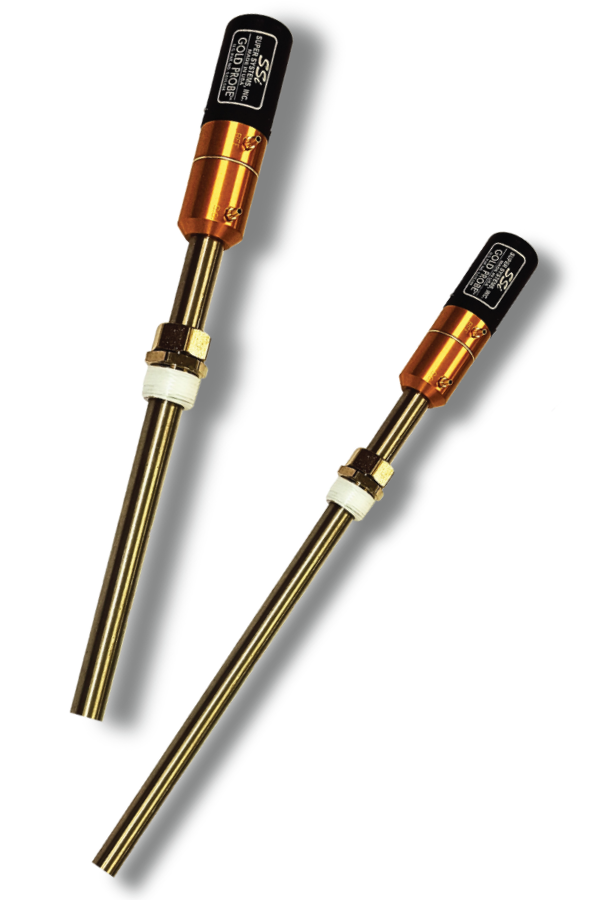
A reinforced spring assembly compensates the differential thermal expansion of ceramic parts and sheath in probes longer than 1000 mm.
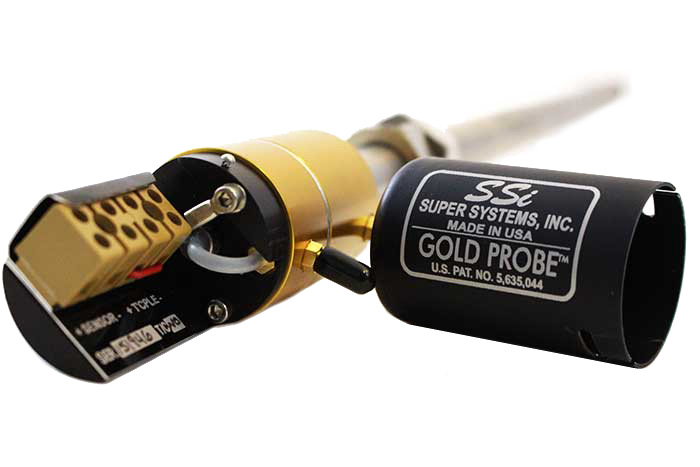
Measures oxygen from 510 °C upwards, covering nitriding, ferritic nitrocarburising and pre- and post-oxidation processes at low temperatures.